


Foundry Tri-Cities readies to welcome youth in February
Posted on December 28, 2025 by
Foundry Tri-Cities readies to welcome youth in February
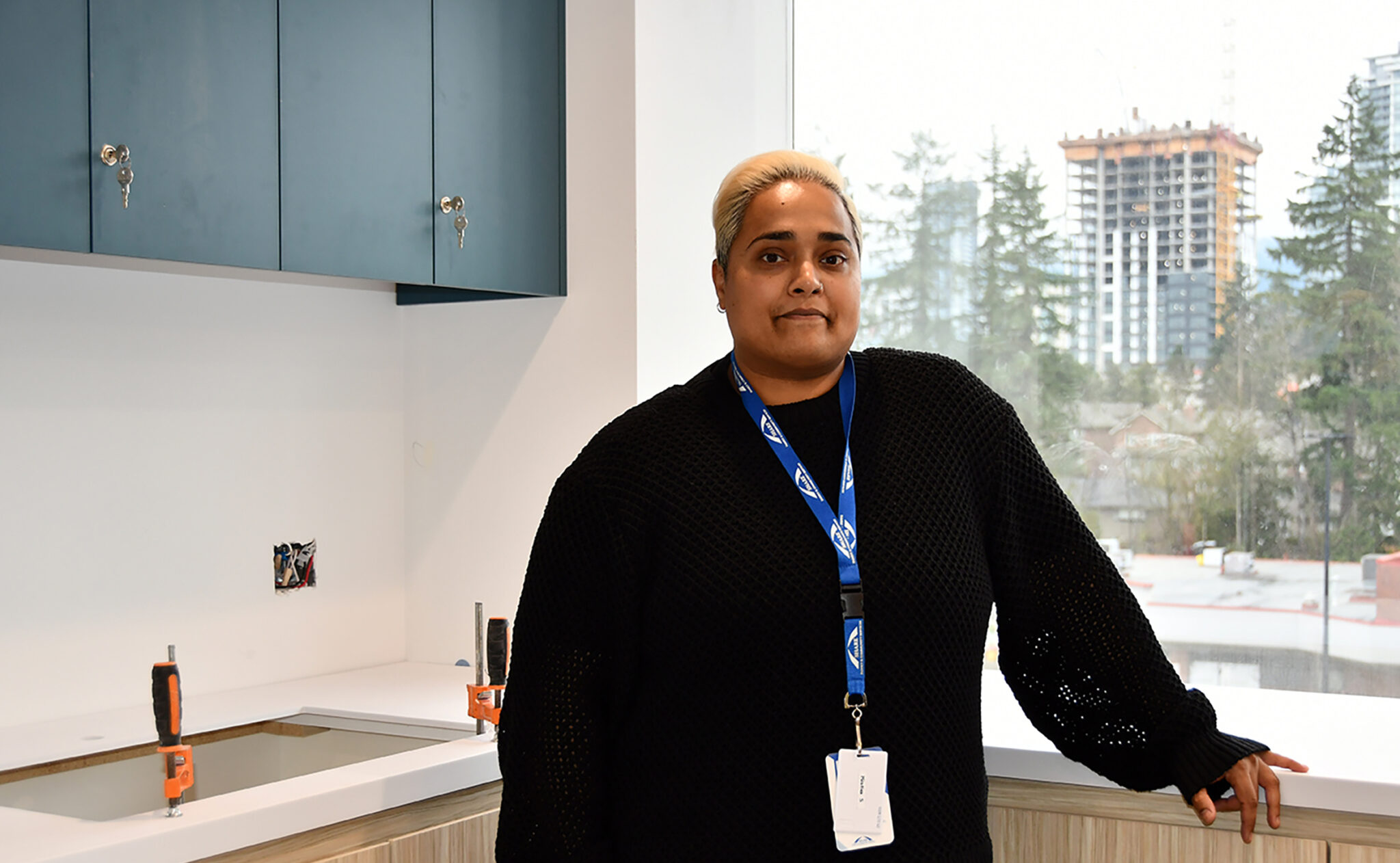
The saws are buzzing and the hammers are clanging on the fourth floor of the PoCo Place tower.
There, the entire level of the Port Coquitlam building is being transformed for one of the most anticipated youth services in the Tri-Cities: Foundry.
Anticipated to open the first week of February 2026, the space at 2755 Lougheed Hwy. will become a place where youth and young adults ages 12 to 24 can drop in and meet — for free — with medical professionals about a wide range of needs for their mental and physical well-being.
Appointments will run from 9 a.m. to 2 p.m. while drop-ins are from 2 to 7 p.m. Monday to Friday.
The wrap-around services for youth and young adults are very much needed in the community, Kistie Singh, the Foundry Tri-Cities lead and SHARE’s director of mental health, told Freshet News on a tour.
In fact, Foundry Tri-Cities has been in the works for several years, with input from a good cross-section in the health field as well as the kʷikʷəƛ̓əm(Kwikwetlem) First Nation. Among its advisors are the Fraser Health Authority, School District 43, the ministry of child and family development, the Fraser Northwest Division of Family Practice, Naloxhome, Douglas College, the YWCA and municipal halls.
SHARE executive director Claire MacLean said her non-profit first got involved in 2019. Currently, SHARE offers many services for youth and their families, including a centre on the fifth floor at PoCo Place for children ages 12 and under, “so adding Foundry in felt like a natural evolution,” she said.
PoCo Place was picked in consultation with experts from the University of B.C. because of its proximity to public transit and its bright location, which looks to the mountains in the north. As well, the site and building are owned by Wesbild, a developer that has partnered with SHARE in the past.
For layout, the Foundry space is split in three, with staff offices on the western side and private medical examination rooms in the middle. To the east and north, though, is the Foundry reception, where attendees can relax and charge their devices; a kitchen to learn about cooking and food security; and seven “talk rooms” for counselling.
Other agencies also focusing on teen and young adult well-being will be on the floor, Singh said.
But while there are Foundry centres dotted around B.C. — and one soon in Burnaby under BC Centre for Ability — Foundry Tri-Cities will largely be geared for youth with mild substance abuse challenges; mental health needs (like anxiety and depression); and individuals who are neurodivergent.
Asked why the 12- to 24-year-old group is targeted, MacLean said those are the ages when the most developmental changes take place.
“In addition, young people and their families have to navigate major system barriers as they transition from the ‘child system,’ including schools and other services, to the ‘adult’ system of services,” she said. “Foundry will be a key factor in smoothing these transitions out and making sure young people have a seamless model of care.”
Currently, the Foundry Tri-Cities is hiring: Medical office assistants, clinical councillors, youth peer workers, family peer workers and a clinical lead are sought, MacLean said.
Started in 2015, the Foundry central office now has 19 centres open around B.C. By 2030, it anticipates helping up to 40,000 young people a year, representing 200,000 service visits across B.C.
“For a decade, Foundry has been a place where young people can find understanding, hope and connection,” said Health Minister Josie Osborne in a Foundry news release. “These centres unite communities to support youth in every aspect of their well-being. As we celebrate Foundry’s 10-year anniversary, we honour the courage of young people who reach out for help and the dedicated teams who meet them with care and compassion every day.”
jcleugh@freshetnews.ca